Device Push-in FocusProduct reveal
Text and object interleave in depth: type rises from behind the product, a device slots into a gap in a sentence, or a word passes through an object and comes out as another word.
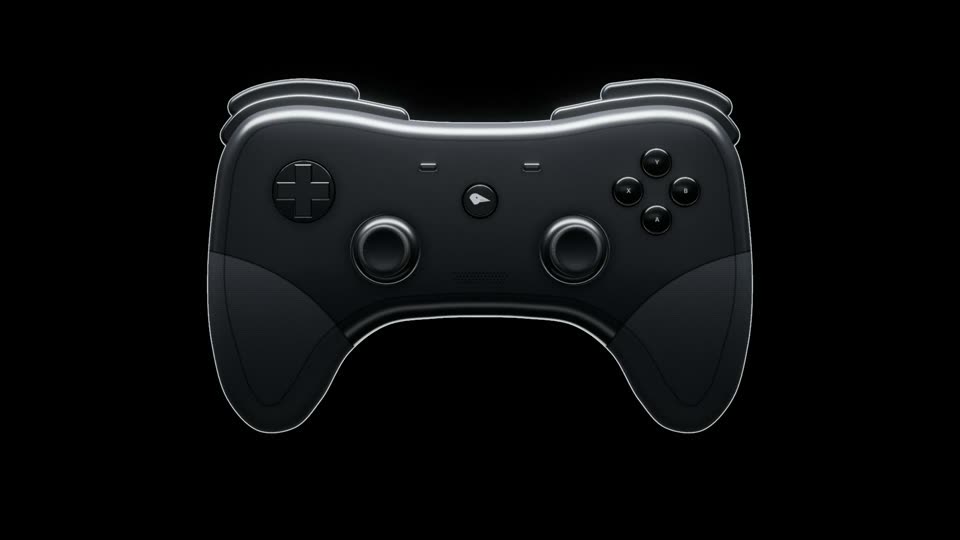
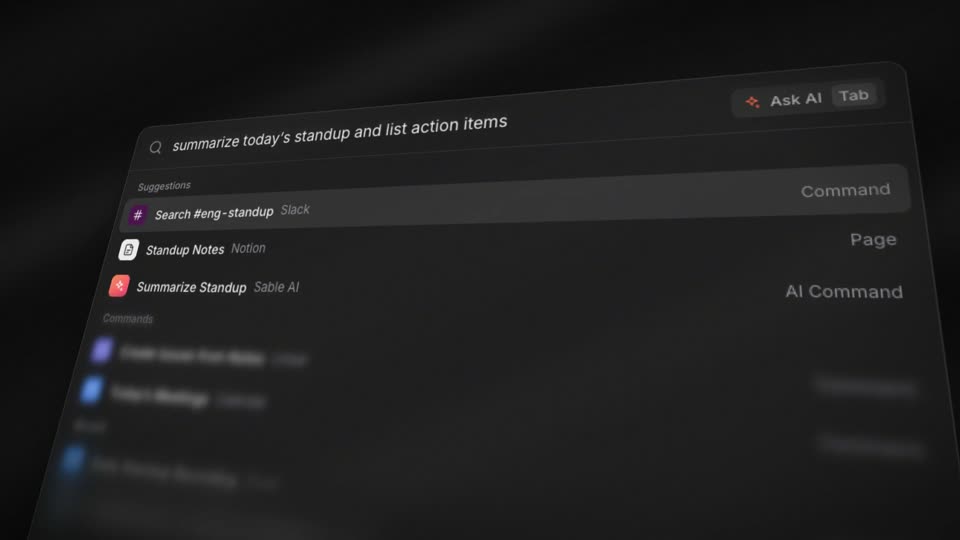
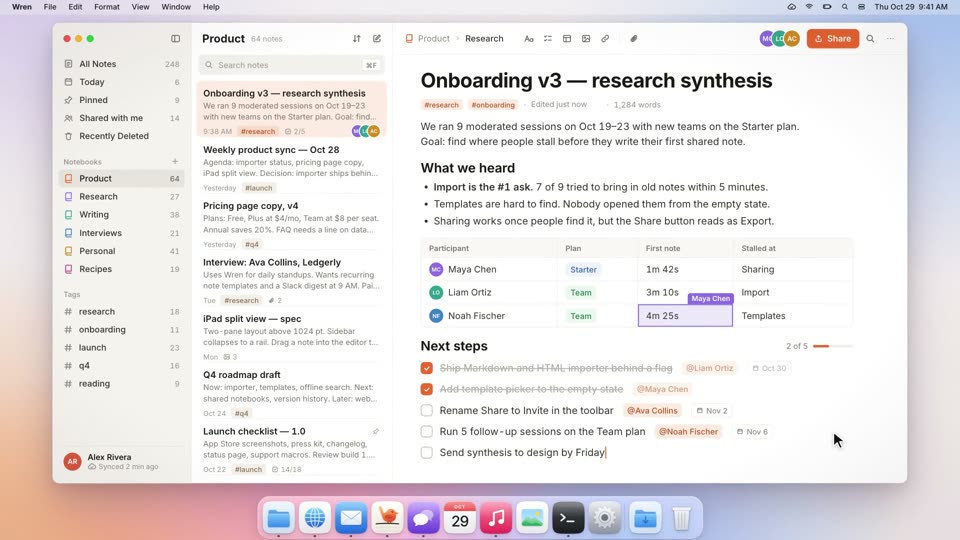
The text sits one layer behind the product, and the product covers about 1/3 of the wordmark, which creates a front layer and a back layer. The sentence breaks in the middle and the device becomes part of it, so the eye travels from the left word through the screen to the right word. Translation is shown through occlusion: the word goes in as black source text and comes out as gradient-colored translation, with no arrows.
cubic-bezier(0.16,1,0.3,1) (expo.out); source text slide linear; product lighting power2.inOut; word lighting and ring glow power2.out and power2.inOut#f5f5f7 in the middle one; wordmark vertical gradient #ff5a0a → #ff7a26 → #ffb27a → #ffd2ad (Archivo Black 340px), translation gradient #4b2dff → #9b33ff → #ff2f8a (background-clip: text), sentence words #5e5e63 lighting to #f5f5f7Build a front-and-back interleave of text and product called Text–Object Interleave as an 11-second film with three scenes and hard cuts at 3.2s and 7.8s. Use three layers: text at the back, your 3D product in the middle (fixed perspective camera, 20° fov, distance 34 units), text in front. Scene 1 (black stage): the case lights up (rim 0–0.45s, key 0.25–1.15s), then from 0.9 to 2.7s it sinks 165px (about 15% of frame height) with expo.out (cubic-bezier(0.16,1,0.3,1)) while a large wordmark with a vertical orange gradient (#ff5a0a to #ffd2ad) rises 255px from behind its top edge and is clipped at the bottom. Scene 2 (light gray #f5f5f7): an earbud close-up with its sound outlet fixed on screen; source text slides at constant speed (linear) for 1.0s into the earbud and is hidden, then 0.4s later the translation emerges from the outlet with expo.out in a purple-pink gradient (#4b2dff to #ff2f8a, background-clip: text); run two passes (3.75–5.15s and 5.85–7.25s). Scene 3 (black): a sentence split into two word groups with a 400px gap one earbud wide; the left words light first (8.05s), the right words 0.25s later; the earbud drops into the gap from above over 0.5s with expo.out (8.55–9.05s), then its light ring glows over 0.6s (9.05–9.65s) and the wordmark settles in with expo.out. Use layered HTML + GSAP over a Three.js canvas.