Dispense Line-upFeatures
Motionboard shot: Dot-Matrix Glyph
A graphic is quantized onto a circular dot-matrix display, and every frame of its rotation or change snaps to the dot grid.
Build a 25 x 25 grid cropped to a circle of radius 12.3 cells (481 dots), with dot diameter at 60% of the pitch. On every frame, rotate a vector glyph (arrow, hourglass, bell with badge, letter M) by the current angle and test whether each cell's rotated position falls inside the shape. Lit dots are white, unlit dots #1a1713, and dots switch with a hard cut, with no glow and no trail.
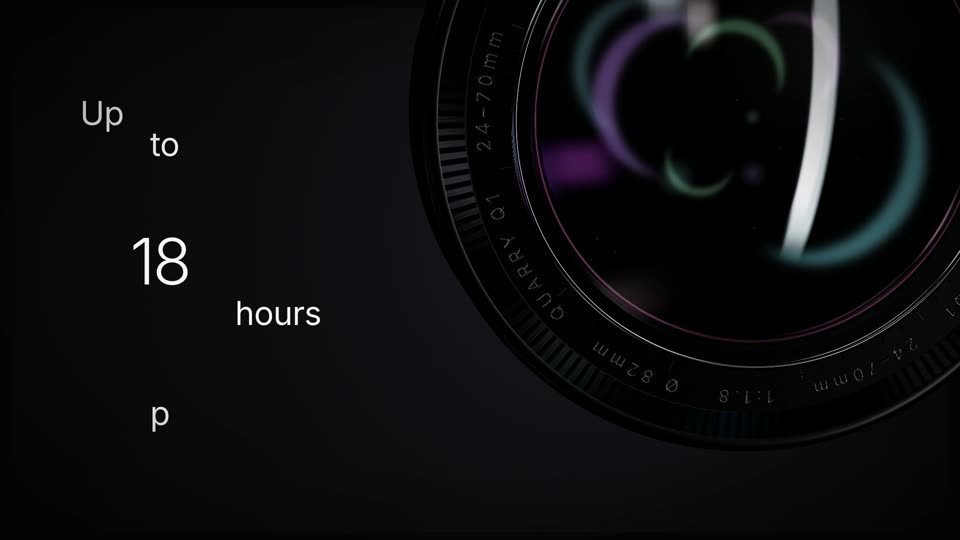
Each rotation covers 120 degrees with cubic-bezier(0.16,1,0.3,1) and gets longer shot by shot: 0.8, 1.15, 1.6 and 2.0 s. Alternate them with crown close-ups at zoom 4.2, 4.8 and 3.3 with depth of field. Eight hard-cut shots fill 11 s under a 20 degree perspective camera. On the end card the dots spell the name letter by letter every 0.1 s from 8.8 s.
Press the copy button on the recipe page and paste it into Claude Code or Codex, or run npx skills add krisyangdev/motionboard. The agent renders an MP4 with HyperFrames, or ports the GSAP timeline to your site with your own glyphs.
npx skills add krisyangdev/motionboardRotation is quantized onto a low-resolution dot matrix, so the motion jumps cell by cell and the edges are jagged, matching how real hardware displays work. Rotation speed drops from shot to shot, so the slowing down itself builds suspense, and alternating dot-matrix shots with expression shots deepens the wait.
cubic-bezier(0.16,1,0.3,1) (strong ease-out); crown click uses the same curve over 0.35s; dots turn on and off with a hard cut, no glow and no trail; camera pushes are linear inside each shot; captions expo.out 0.8s; scene fade-in 0.5s power2.out#1a1713, set in a cream plastic body (#e3ddd0) with a knurled aluminium crown on a dark wood table; warm spot lighting (#ffd0a0), warm bokeh, ACES tone mapping, 0.4 vignette, light grain. Captions Inter 500 84px and a tagline Inter 400 28pxBuild a graphic rotation called Dot-Matrix Glyph, 11s, on a physical device shot with a perspective camera (20 degree field) and hard cuts. A black circular screen behind glass holds a 25x25 grid cropped to a circle of radius 12.3 cells (481 dots), dot diameter 60% of the pitch, lit dots white and unlit dots dim #1a1713, set in a cream plastic body (#e3ddd0) with a knurled aluminium crown on a dark wood table, lit by warm spots with bokeh, ACES tone mapping and a 0.4 vignette. Rotate vector glyphs (arrow, hourglass, bell with badge, letter M) by angle every frame and test each cell against the rotated shape: inside lights, outside stays dim, with hard on/off cuts, no glow and jagged edges left visible. Each rotation travels 120 degrees with cubic-bezier(0.16,1,0.3,1) and ends at 30 degrees for the arrow and 0 degrees for the others. Use four wide shots (0-1.4s, 1.85-3.55s, 4.0-6.0s, 6.4-8.8s) with rotation durations of 0.8s, 1.15s, 1.6s and 2.0s, each pushing slowly and linearly, and cut to 0.4-0.45s close-ups of the crown (zoom 3.3-4.8 with depth of field) in between, with the crown clicking 30 degrees at 1.5s and 6.1s. At 8.8s fade the lights out over 0.65s and let the dots spell Mote letter by letter at 8.8, 8.9, 9.0 and 9.1s in a 5x7 pixel font, with captions and a tagline rising with expo.out.
It is motion on a display built from a grid of dots that are either on or off. Each frame decides which dots are lit, so movement advances cell by cell and edges look stepped, as on real dot-matrix hardware.
Yes. Draw the grid with canvas or SVG circles and, for each dot, test whether it lies inside the shape at the current angle. The test runs per frame, so the same code renders to MP4 or runs live on a page.
Yes. Motionboard is free and MIT licensed, so you can use and modify the recipes and the films they produce in personal and commercial projects. The licence asks only that copies of the recipe files keep the copyright notice.