Dispense Line-upFeatures
Motionboard shot: Auto Zoom / Zoom-to-Cursor
The camera pushes to the target element in 0.4–0.8s, holds for one click or input, then pulls back to the full view.
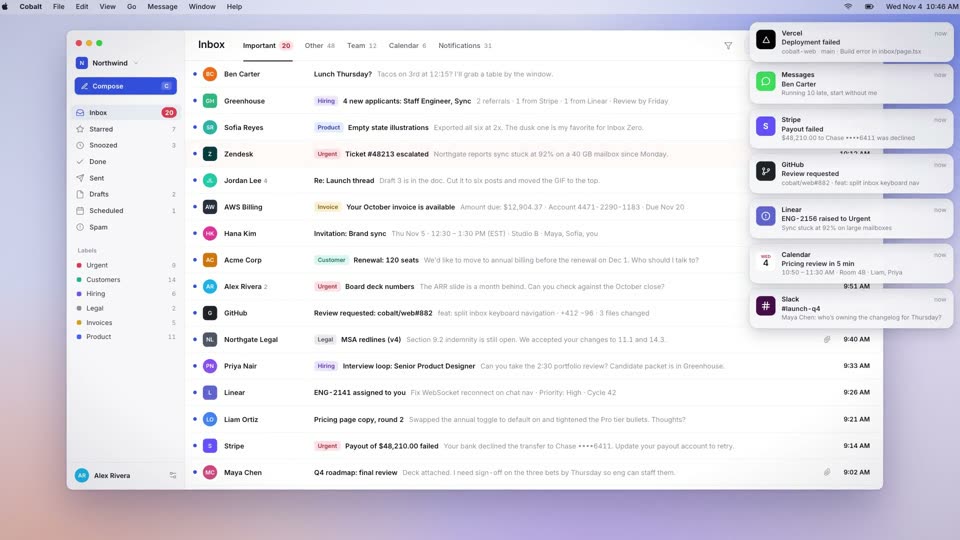
Put the whole calendar window in one container and scale it 2× on each push, translating the target element to the frame center (960, 540) with transform-origin at the container top-left. Push in over 0.6s with expo.out, cubic-bezier(0.16,1,0.3,1), hold 2.35–2.75s, then pull back in 0.7s on the same easing.
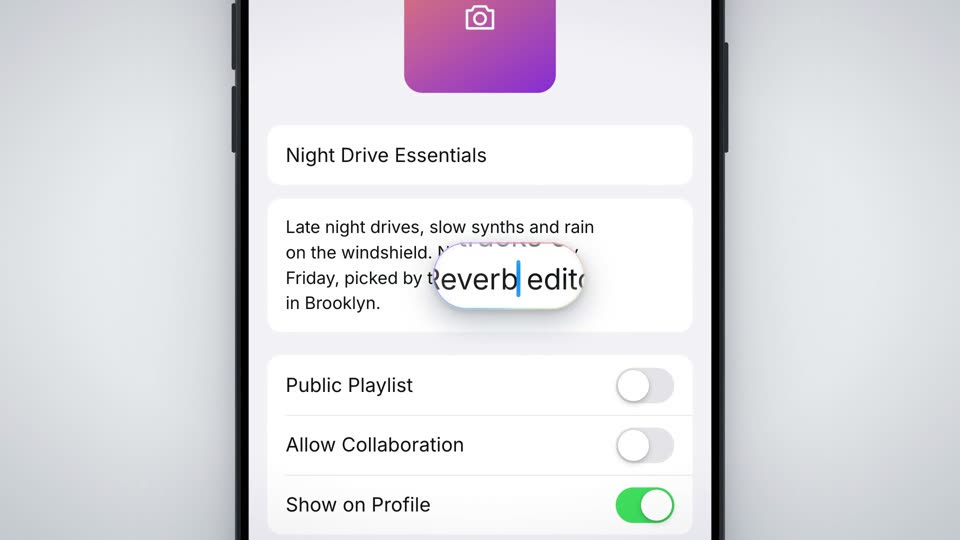
The camera arrives first and the cursor starts moving 0.1s after the push completes. Add a CSS blur of 3px on each push and 2px on each pull (0.12s up, 0.3s down) as motion blur. Each pull-back starts 0.7–0.85s after the action, while the toast is still showing. The two actions are dragging a card to the next day and clicking an empty slot to type a title.
Press the copy button to send this recipe to Claude Code or Codex, or install the skill once with npx skills add krisyangdev/motionboard. The agent rebuilds the window in DOM so text stays sharp at 2×. Render an MP4 with HyperFrames, or port the GSAP timeline to your website.
npx skills add krisyangdev/motionboardEach push-in serves exactly one action and pulls back as soon as the action is done, so viewers always know where they are on the full page. The ease is fast at first and slow at the end, so the camera lands crisply.
cubic-bezier(0.16,1,0.3,1) (expo.out); cursor moves power2.inOut; press 0.08s power2.out, release 0.22s back.out; motion-blur filter ramps up with power1.out and fades with power1.inscale 2x on both pushes, with the target element translated to frame center (960, 540) and transform-origin at the container's top-left corner; blur 3px on each push and 2px on each pull (0.12s up, 0.3s down); a slow whole-scene drift scale 1.00→1.035 over 9.2srgba(139,92,246,1), mark #3b5bfd; the motion blur is a CSS blur on the camera layer; closing lockup with a 3% push over 1.5sShow two actions in your interface with a shot called Auto Zoom / Zoom-to-Cursor, 11 seconds long. Put the whole window in a container and rebuild the UI in DOM so it stays sharp when magnified. Push the camera to the first target over 0.6s with cubic-bezier(0.16,1,0.3,1), scale 2x, translating the target to frame center with transform-origin at the container's top-left, and add a slight CSS blur (3px) that ramps up in 0.12s and fades over 0.3s. Only after the push completes (0.1s later) does the cursor move: grab a calendar card at 2.4s and drag it to the next day over 0.6s; on the drop frame (3.2s) the card, side panel, menu-bar text and a toast all change together. Hold, then pull back to the full view over 0.7s with the same easing (blur 2px). Repeat for the second action: push at 5.0s, click an empty slot at 6.25s with a ripple, a draft card opens, type a title from 6.45s, press Enter at 7.65s so the panel swaps and a toast shows on the same frame, and pull back at 8.35s. Keep a slow 3.5% drift on the whole scene (scale 1.00→1.035 over 9.2s). At 9.25s fade the window out and bring in the wordmark lockup over 0.6s (expo.out).
Zoom-to-cursor is an effect in which the view zooms toward the pointer or the element being used, holds while the action happens, then returns to the full view. It keeps small UI actions legible in a recording.
This recipe uses 0.6s for each push-in and 0.7s for each pull-back on the same expo.out ease, with one action per zoom. Short moves keep the viewer oriented in the full page.
Yes. Motionboard is free and MIT licensed, so you can use and modify the recipes and the films they produce in personal and commercial projects. The licence asks only that copies of the recipe files keep the copyright notice.